


































 /SC-1600

 TOP
TOP


Vol.11 The Role of Blinking
| In “Vol. 14 Tear Function and Dry Eye,” we explained that tears constantly moisten the eye’sIn this issue, we introduce the role of blinking, which is important for keeping eye moisture.
|
 |
Types of Blinking
 |
Blinking is the motion of opening and closing the eyes.
It occurs in three ways: (1) “Periodic blinking” happens naturally without thinking (2) “Reflex blinking” occurs when a bright light shines on our eyes, making us blink. (3) “Voluntary blinking,” is when we blink consciously, like when winking.
|
Function of Blinking
Tears protect the eyes. If the eyes are kept open at all times, they are exposed to the outside air and eventually become dry. Blinking plays an important role in preventing this problem. The muscles in the eyelids contract, causing the blinking. Contraction of these muscles moves tears from the lacrimal glands to the eye’s surface, creating a thin film of tears.
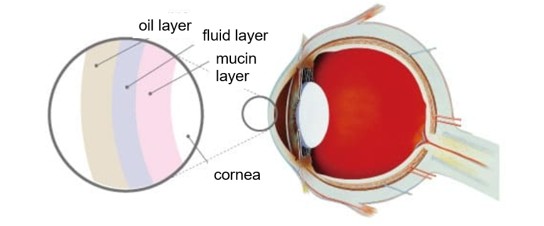
The film consisted of three layers: mucin, fluid, and oil (Figure 1).
Of these layers, the layer in contact with the eye’s surface (cornea), called the mucin layer, contains a slightly sticky protein called mucin, which helps tears stick to the cornea. The outermost layer of the eye was covered with a thin layer of oil (the oil layer). This layer of oil covers the tear film with each blink and prevents the eye from drying.
Blinking frequency
 |
We blink approximately 20 times per minute, 1,200 times per hour, or 19,200 times if we are awake for 16 hours a day, 7 million times per year, or 500 million times if we live until we are 70 years old.
However, if you use a computer, smartphone, or video game and stare at a screen for a long time, you blink less often and produce fewer tears. The eye’s surface becomes dry and damaged, and “dry eye” occurs. Dryness can cause tear film instability, leading to vision loss. In addition, the habit of staring at a screen can cause the eyes to blink less frequently, resulting in eye fatigue and stress, which can lead to stiff shoulders. When looking at a computer or smartphone or playing a game, try to relax and blink naturally. |
Reference: “Professor Tokoro’s Ophthalmology Lesson Q&A 100” by Kei Tokoro, published by Jiyu Kikaku & Co.
“Science of Eye Health: From Techno-Stress Prevention to Corneal Transplant,” by Kazuo Tsubota, Kodansha Ltd.
Back to List