


































 /SC-1600

 TOP
TOP


Vol.12 History of Contact Lenses
| Several people use contact lenses to correct their vision. They are very helpful for people who are uncomfortable wearing glasses or who find glasses inconvenient while playing sports. Recently, bifocal, disposable, and colored contact lenses have become popular and are used by people of even wider generations. This issue introduces the history of contact lenses. |  |
Principle of Contact Lenses
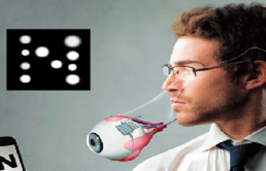
Leonardo da Vinci, a famous Italian scientist, discovered this phenomenon. In 1508, he filled a hemispherical glass container with water and used an illustration of an open eye immersed in water to discuss its effectiveness in correcting vision.
Hard Contact Lenses
Approximately 440 years after da Vinci’s discovery, hard contact lenses were developed using polymethylmethacrylate (PMMA), an acrylic resin. However, early hard-contact lenses did not allow oxygen to pass through, leading to issues such as limited wear time and potential cornea damage. Subsequently, hard contact lenses made of oxygen-permeable materials were developed for continuous wear. In addition, before PMMA contact lenses development, hard contact lenses were made of glass, but they were not popular because they were difficult to manufacture.
Soft Contact Lenses
However, when were soft contact lenses developed? It started in 1960 when a Czechoslovakian laboratory published a report on the production of hydrogel contact lenses. In 1965, this technology was transferred to the United States, where soft contact lenses were first developed. The first soft contact lenses were launched in 1971, and ten years later, continuous wear was approved. Soft contact lenses are made of water, which makes them soft, oxygen permeable, and comfortable to wear. The emergence of soft contact lenses has led to a dramatic increase in contact lens penetration in many countries.
Contact lenses, which are now very common, have a history of approximately 500 years, dating back to the principle of contact lenses.
Contact lenses are medical devices, and eye examinations, contact lens prescriptions, and contact lens-fitting instructions are considered medical procedures. When using contact lenses, an ophthalmologist prescribes lenses that are suitable for the eyes and checks the patient’s condition when wearing the lenses.
Back to List