























 /SC-1600

 TOP
TOP


Vol.15 Myopia, hyperopia, astigmatism, presbyopia
| The causes of poor vision vary among individuals. Some causes include refractive error, where the retina fails to focus and produce a clear image; diseases affecting the lens and cornea; and retinal diseases.
This issue covers myopia, hyperopia, and astigmatism, which are refractive errors, as well as presbyopia, an age-related condition. |
 |
1. Emmetropia
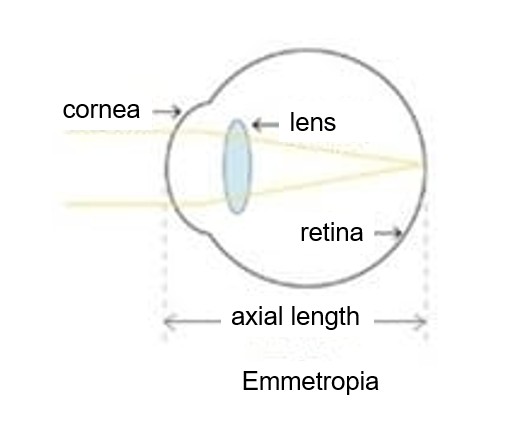 |
Emmetropia is an eye condition in which light from a distance is focused directly on the retina without the need for adjustment. Consequently, the convex and concave lenses are unnecessary for viewing distant objects. |
2. Myopia
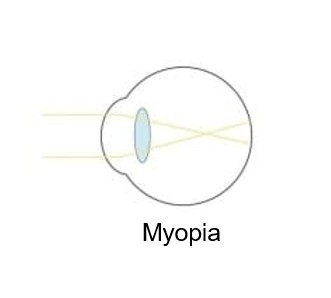 |
Myopia is an eye in which light from a distance is focused in front of the retina when the eye is “unadjusted.” Myopia is corrected using concave lenses. The causes of myopia are not well understood; however, the main causes are as follows:
*1: Length of the eye from the cornea to the retina (see the figure for normal vision). |
3. Hyperopia
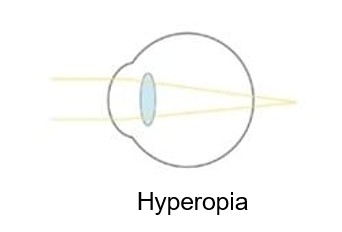 |
Hyperopia is an eye in which light from a distance is focused behind the retina when the eye is “unadjusted.” The hyperopia was corrected using convex lenses. The causes of hyperopia are not well understood; however, the main causes are as follows:
|
4. Astigmatism
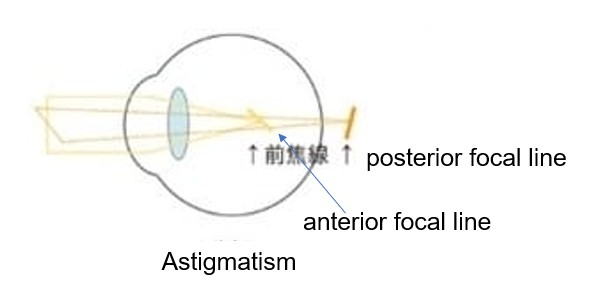 |
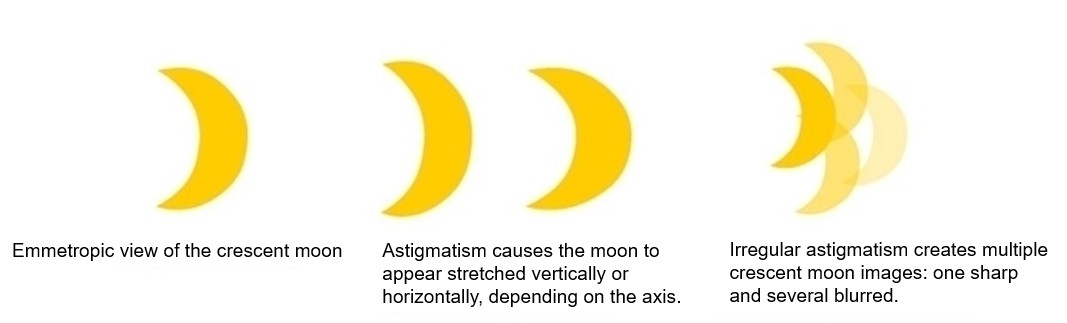
Astigmatism is the distortion of the cornea or lens that prevents the eye from focusing on a single point. This can make vision appear distorted or cause objects to seem distorted. This is because the curves of the cornea and the lens differ, causing each curve to focus at different points.
The way we see things differs depending on our state of astigmatism. Individuals with regular astigmatism view objects that are distorted in the direction of their strong astigmatism, which can be vertical, horizontal, or oblique. Individuals with irregular astigmatism view objects as multiple images. When they look at the moon or traffic lights at night, they can see several objects.
|
5. Presbyopia
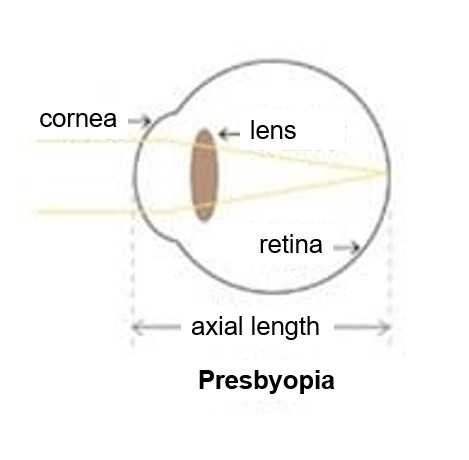 |
Presbyopia is a phenomenon in which the lens loses elasticity with age and the eye’s ability to adjust itself deteriorates. Presbyopia begins at approximately the age of 40, and the way people see it differs from person to person.
|
Back to List